Sometimes people assume that growth comes from being changed — corrected, improved, redirected into something more acceptable or more contained.
That’s never felt true to me.
In my own personal growth, I’ve learned the value of having a mirror — a place where thoughts, decisions, reactions, and questions can be laid out and reflected back with clarity. Not softened to protect me, and not sharpened to provoke me. Simply seen, organised, and returned with a neutral or unfamiliar perspective.
Sometimes therapists need a therapist too.
Not because they are broken, but because no one is meant to hold their entire inner world alone.
My mirror does occasionally adopt a distinctly father- or mother-like concerned tone — usually when I arrive with particularly reckless or emotionally fuelled thoughts. At which point I tend to respond with a very sincere, very sarcastic:
“Thank you, Dad.”
And then we unpack it anyway.
Thought by thought. Without judgement.
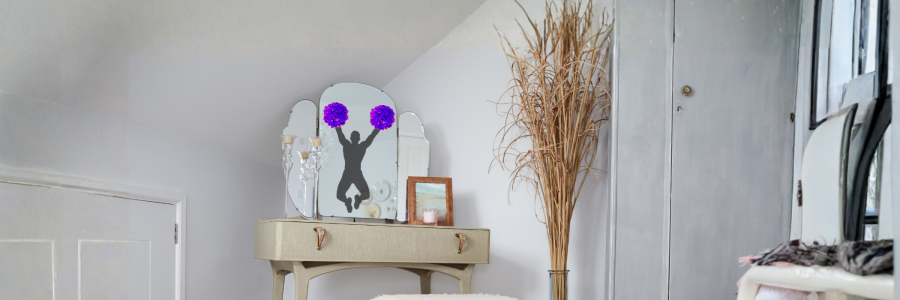
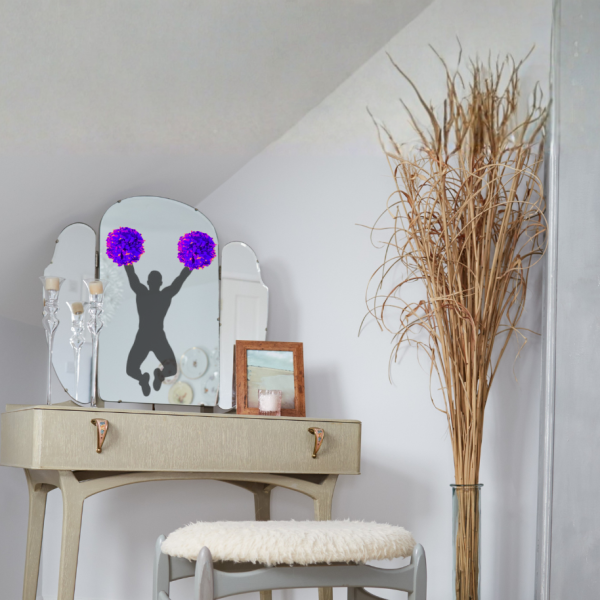
Other times, though, analysis isn’t what’s needed at all. Sometimes I don’t need logic or reframing — I need a cheerleader. And in those moments, my mirror stands ready with fluorescent purple pom-poms, enthusiastically chanting “you go girl” or “you’ve got this” until the doubt loosens its grip.
Both have their place.
A mirror doesn’t tell you who to be. It doesn’t push you into a box or shape you into something more palatable. It doesn’t take your experiences away or rush to reframe them. It simply meets you where you are — whether that’s calm, chaotic, confident, or uncertain.
That pause matters.
Because when emotions are running high, it’s easy to storm into decisions — lightsaber swishing, guns blazing (for the sci-fi challenged). Reflection interrupts that momentum. It replaces reaction with choice.
When thoughts and experiences are reflected back logically and calmly — or met with simple, wholehearted encouragement — something subtle happens. Emotion settles. Perspective widens. Agency returns. Growth doesn’t come from force. It comes from being seen clearly enough to decide.
I don’t believe the role of reflection is to change a person.
I believe it’s to illuminate them.
To help people gather their thoughts, sit with their experiences, and decide — consciously — what to keep, what to release, and what to grow from.
That is the work.
Not fixing.
Not reshaping.
But seeing clearly enough to pause — and move forward with intention.